

Defining Weather Balloons – What They Are And How They Work
Defining Weather Balloons – What They Are And How They Work
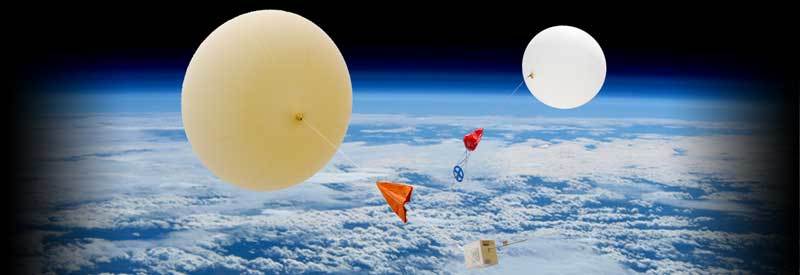
Occasionally, the term “weather balloon” is mentioned during weather forecasts or meteorological discussions. For many readers, it may be confusing and unclear what these devices are and how they function.
Although thousands of these airborne “mobile weather stations” are launched every month across the world, not that much is known about exactly what they are and how they work.
Balloons are one of the oldest forms of aviation technology that have been around for centuries, but it was only during the 20th Century that they were utilized on a large scale to take meteorological measurements.
What Is A Weather Balloon?
Before taking a more detailed look at what they are and how they function, one first needs a clear, concise definition of what exactly weather balloons are:
Weather Balloon Definition
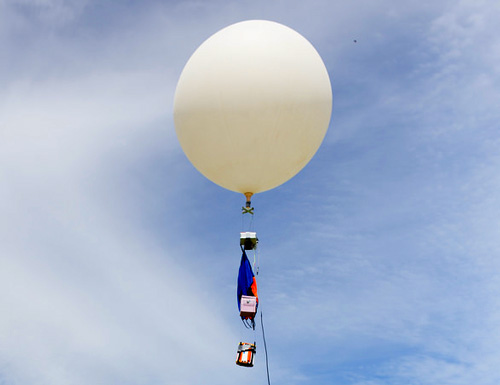
A weather balloon is defined as a device that carries meteorological instrumentation to the upper troposphere and lower stratosphere. It consists of a balloon attached to a radiosonde that measures atmospheric conditions, which are sent back to a base station on the planet’s surface for analysis.
What Does A Weather Balloon Look Like?
At first glance, or just glancing at it briefly, you will think a weather balloon is nothing more than a regular oversized balloon. Although there are many similarities, weather balloons differ in quite a few ways.
The first obvious difference is the size of a weather balloon. It can be anything from 6 to 8 feet (1.40 to 2.40 meters) in diameter, depending on the weight of the instrumentation and the height the balloon needs to reach.
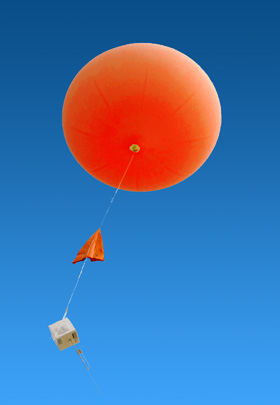 Made of a highly flexible and tough latex material, weather balloons normally have a white or transparent color. (Although they can also be obtained in red, blue, yellow, or normal latex tan.)
The shape and size of a weather balloon largely depend on its altitude. On the ground, many weather balloons seem to be a bit deflated with an oval shape. But meteorologists know it will rapidly expand as it gains altitude and doesn’t want it to burst too early in its ascent.
The ones you view high up in the atmosphere will be round in shape. This happens because the air pressure outside the balloon continues to drop as the altitude increases, allowing the air inside the balloon to continue to expand as the balloon keeps rising up higher.
At the bottom, an array of weather instruments called a radiosonde is connected to the balloon.(With a built-in orange parachute to lower the radiosonde safely to the ground.)
How Does A Weather Balloon Work?
The latex material is normally filled with either hydrogen or helium to lift the balloon to the desired height required by the meteorologists. The radiosonde is connected to the bottom of the balloon, and the balloon is then released from the appropriate launch site.
The launch site is normally in a large open area where there is no danger of drifting into any large vertical objects like tall buildings or mountainous terrain. Airfields are a very popular location to launch weather balloons from.
As soon as the balloon is released and starts rising into the air, the radiosonde starts sending data back to the base station, which the meteorologists can start to analyze.
As it gains altitude, the air inside the balloon starts expanding, and the balloon grows larger as it rises into thinner air.
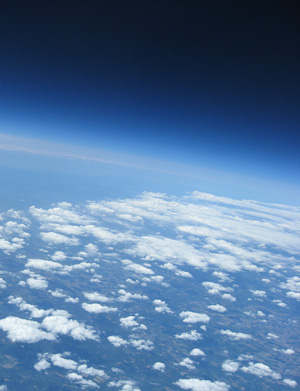 Weather balloons are capable of reaching heights of 100 000 feet (30 480 meters) within an hour after being launched from the surface. Reaching this height gives them the ability to record weather data that no other weather data-gathering device can, which makes them invaluable to meteorologists worldwide.
You might wonder what happens to weather balloons after they reach this height. Well, they explode, literally. There is so little pressure in the air at this height that the air inside the balloon expands to such a point that the latex cannot be stretched any further, and the balloon literally explodes.
The weather balloon’s (radiosonde) payload starts falling to the ground, but a small orange parachute attached between the radiosonde and balloon gently guides it back down to Earth.
It’s important to try to preserve the radiosonde, as it can be reconditioned and used again. This will lead to a huge saving in cost. (Especially if you take into consideration that a weather balloon is launched twice a day from 92 weather stations in the United States alone. This is a total of 67 160 weather balloons released yearly in one country!)
Unfortunately, only 25% of all radiosondes are recovered and returned to be reconditioned.
And that is the lifecycle of a weather balloon, lasting for a total of about 2 hours after being launched. Yet, you have to take into consideration the fact that the onboard instruments start sending back precious data from the moment the balloon is launched all the way until it reaches a height of 100 000 feet an hour later.
Conclusion
This article explained exactly what a weather balloon is and what it does. Even more so, it emphasized the important role they play in the meteorological field and how vital they are in gathering important data needed by meteorologists to understand current weather conditions and forecast future weather events.
Yes, they use aviation innovation more than a century old. Yet, they still fulfill a role unable to be fulfilled by any other device or instrument available today.
Until next time, keep your eye on the weather!